Shopping online for plus-size clothes can feel like a guessing game. You may wear one size at one store and a different size at another. Then a dress fits your bust but feels tight at the hips, or jeans fit your waist but gap in the back.
The good news? You do not need to guess.
A smart shopping method can help you choose clothes based on your actual measurements, the garment’s measurements, and the fit you want. I recommend this approach because it works across brands and helps you focus on how clothes fit your body instead of the number on the tag.
1. Start With Your Current Body Measurements
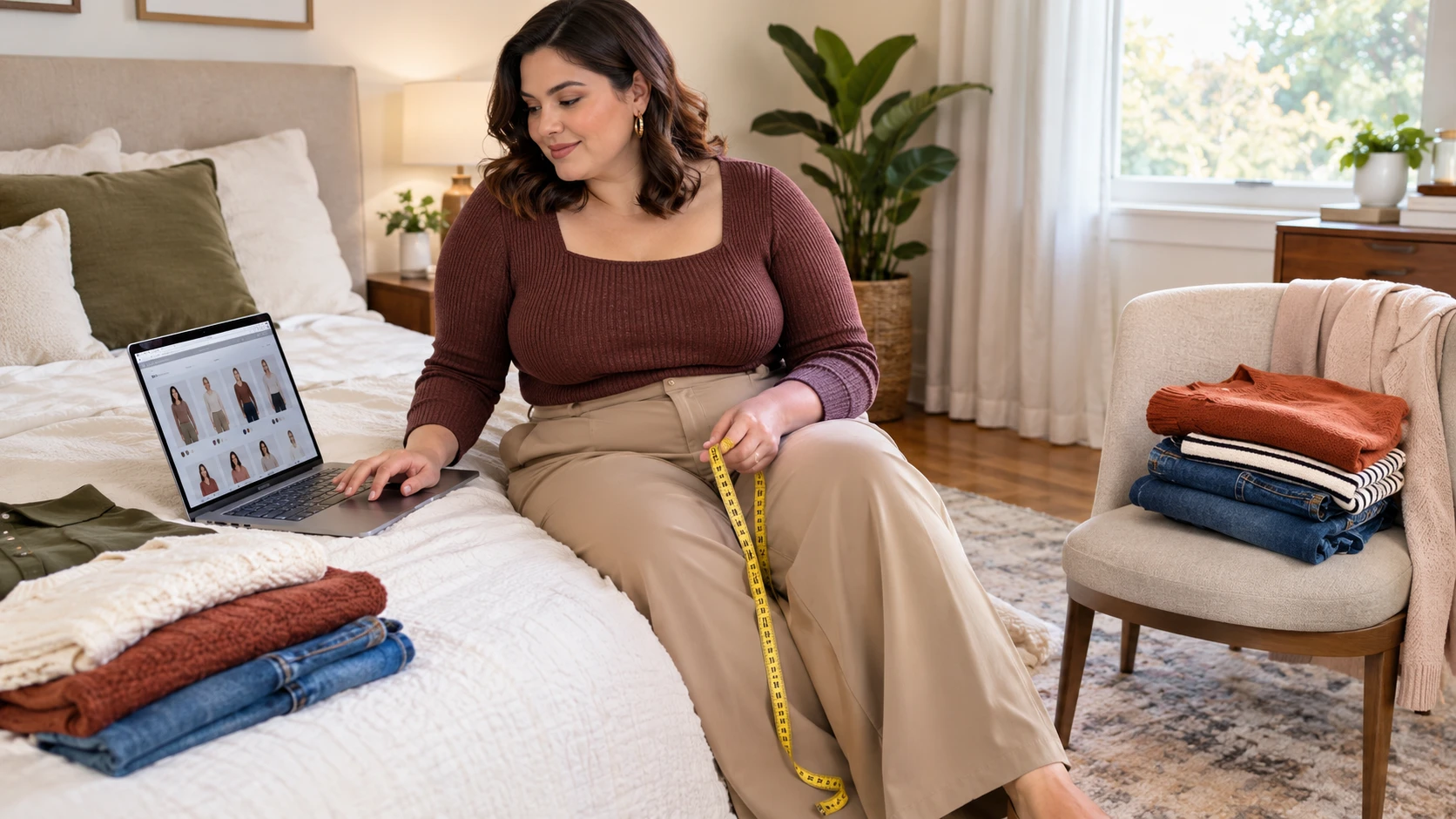
The best first step for how to shop online for plus size clothes without guessing sizes is simple: measure yourself before you shop.
You need three main numbers: bust, waist, and hips. Use a soft measuring tape and keep it level around your body. Do not pull the tape tight.
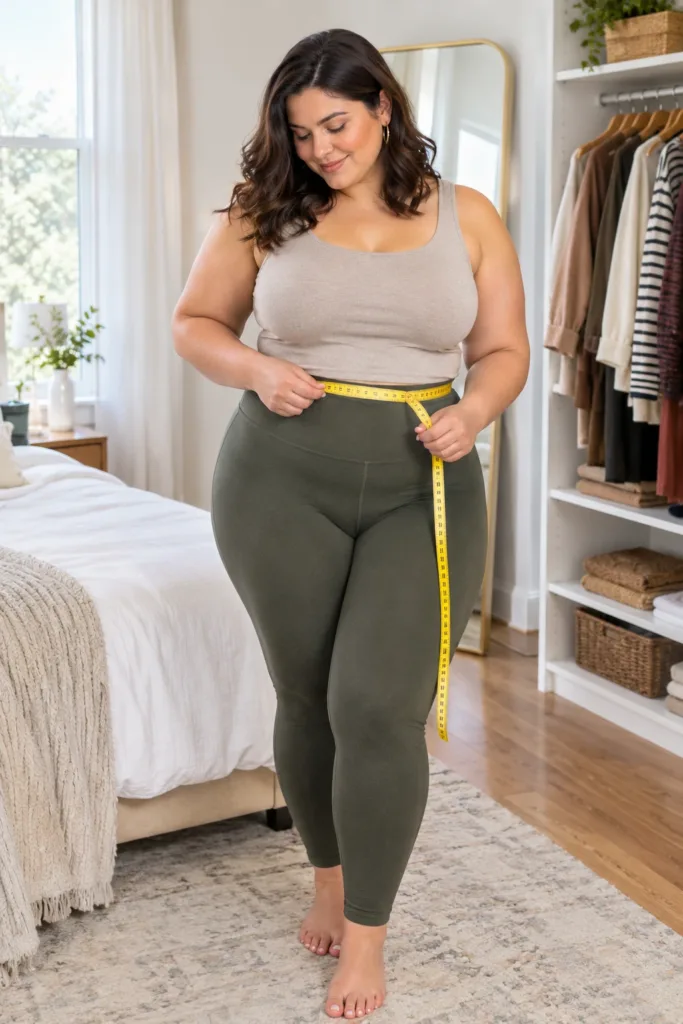
Measure over the type of undergarments you normally wear with clothes. For example, if you usually wear a bra under dresses, wear one while measuring.
Quick measuring tips:
- Keep the tape flat against your body.
- Do not hold your breath.
- Measure your fullest bust area.
- Measure your natural waist.
- Measure the fullest part of your hips.
- Write the numbers in your phone.
Your measurements can change over time, so update them every few months or before buying expensive pieces.
2. Never Choose a Size From the Number Alone
A size 18 at one brand may not fit like a size 18 somewhere else. Brands create their own size charts, and they may use different measurements for each size.
Always open the specific product’s size chart before you add an item to your cart. Do not rely only on the general size chart for the entire website.
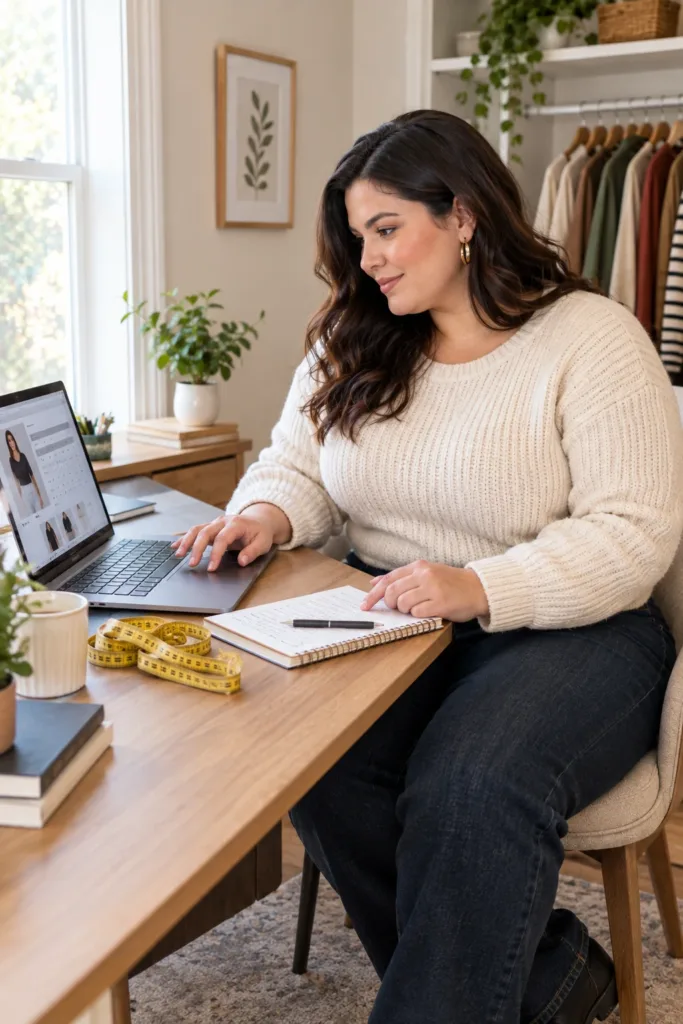
Look at the garment’s measurements when the store provides them. A product page may also tell you whether the item runs small, runs large, or fits true to size.
This small step can save you from many returns.
3. Match Your Largest Measurement First
This trick helps when your bust, waist, and hip measurements fall into different sizes.
For example, your bust may match an XL, your waist may match a 1X, and your hips may match a 2X. Do not automatically choose the middle size.
Instead, choose based on where the garment needs the most room.
For a fitted skirt, your hip measurement matters most. For a button-up shirt, your bust may matter more. For wide-leg elastic-waist pants, your waist and hip measurements both matter, but the fabric stretch can change the final fit.
Think about the garment before you choose the size.
4. Check the Fabric Before You Pick Your Size
Fabric can completely change how the same measurements feel on your body.
A stretchy knit dress can give you more room than a structured woven dress with the same listed measurements. Denim with stretch may feel very different from rigid denim.
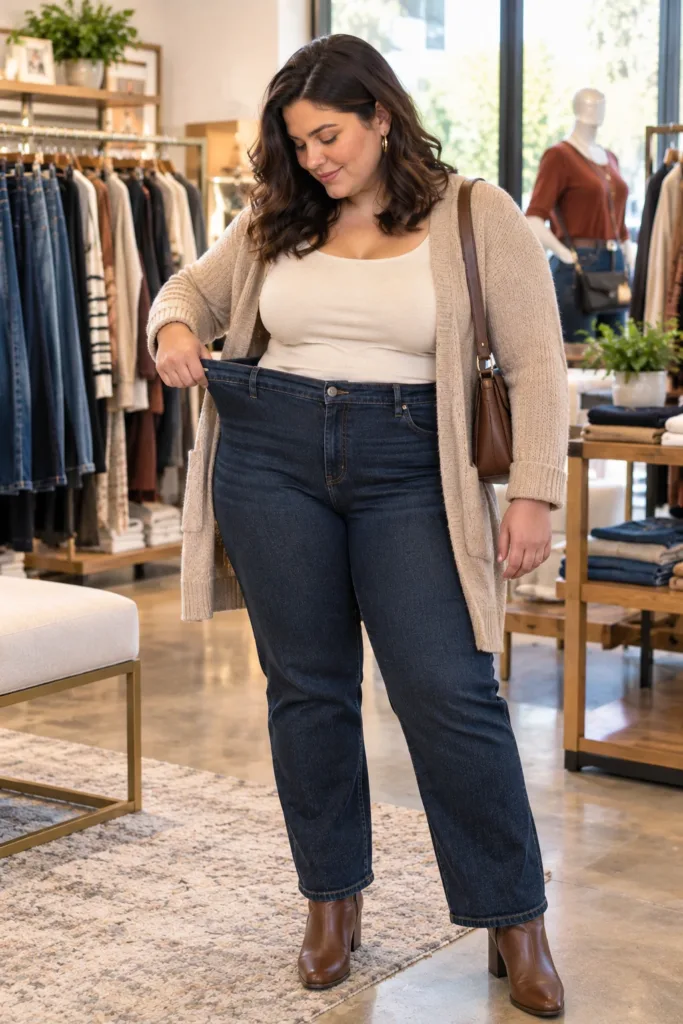
Look for words such as stretch, elastic, spandex, cotton blend, relaxed fit, structured, fitted, and oversized.
Pay special attention to fabric content when shopping for jeans, fitted tops, body-skimming dresses, and tailored pants. A little stretch can make movement easier, while firm fabric needs a more precise fit.
5. Learn How the Garment Should Fit
Your goal should not always mean choosing the biggest size. Instead, learn what a good fit looks like for that particular garment.
A shoulder seam should sit close to your natural shoulder on a structured top. A waistband should stay comfortable when you sit down. A button-front shirt should not pull across the bust.
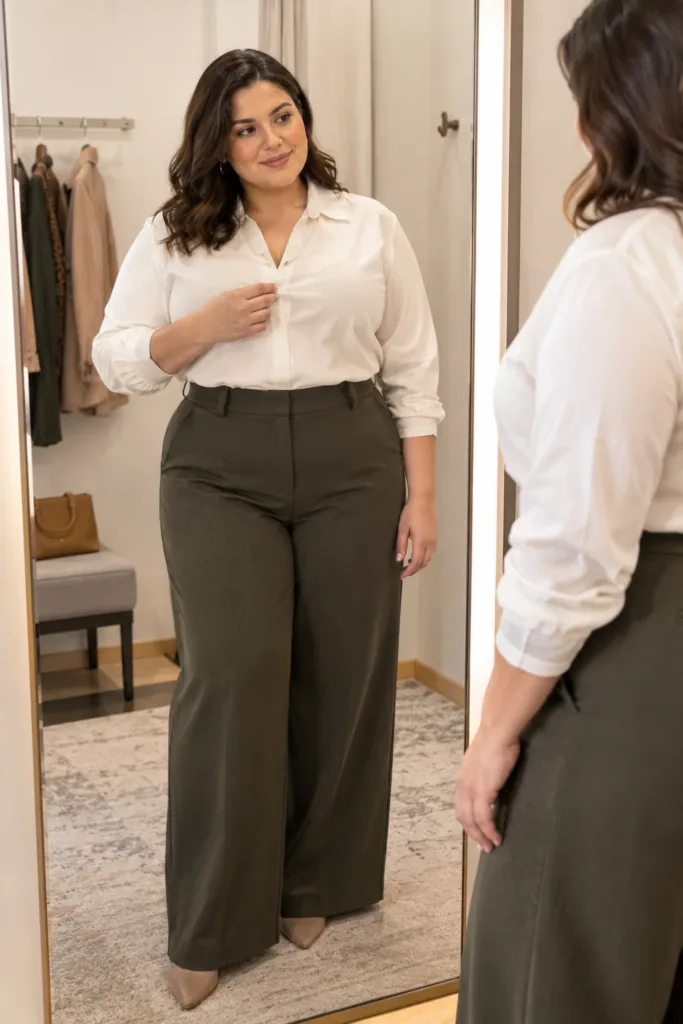
For dresses, check where the waist seam lands. If it sits too high or too low compared with the garment photos, the dress may create a different shape than you expect.
Use the model photos as a fit clue, not as a promise that the garment will look identical on you.
6. Read Reviews for Fit Clues, Not Just Ratings
Customer reviews can give you information that a size chart cannot.
Look for reviews that mention height, body shape, fabric stretch, waistband comfort, sleeve length, and whether the item feels loose or snug. Reviews from shoppers with different proportions can help you understand how the garment behaves.
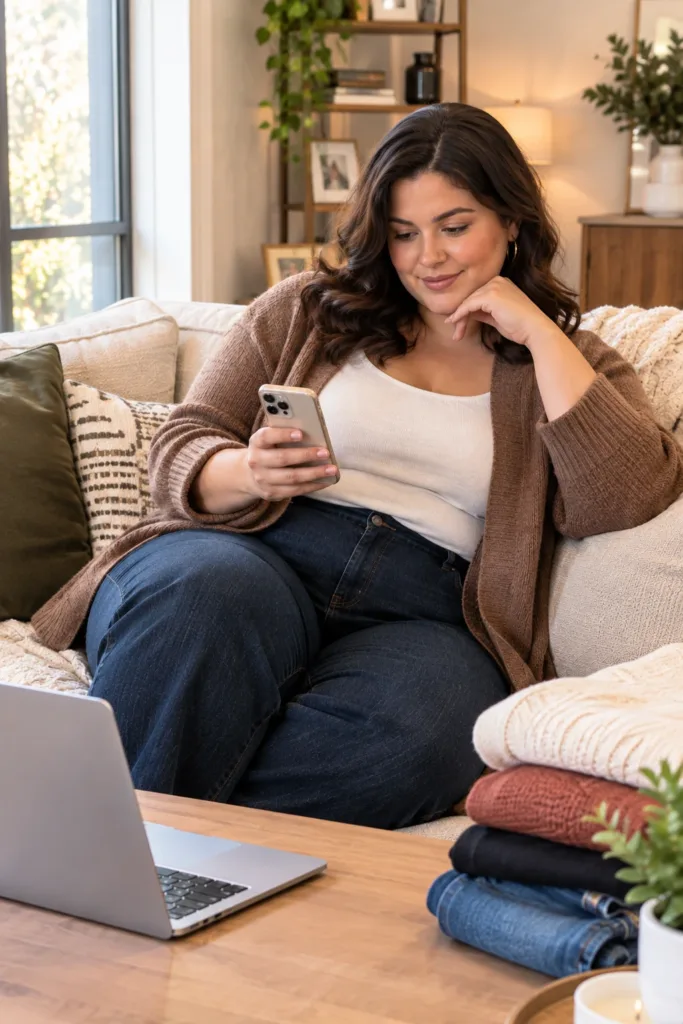
Pay attention to repeated comments. One person saying “size up” may reflect personal preference. Ten shoppers saying the same thing gives you a much stronger clue.
Also check customer photos when available. They can show the real fabric, length, drape, and fit better than polished product photos.
7. Build a Personal Brand Size Map
Once you find brands that fit you well, stop treating every online order like a new experiment.
Keep a simple note with the brand name, size, garment type, and fit. For example, you might record that you wear one size in that brand’s jeans but another size in its relaxed sweaters.
This works especially well for repeat purchases.
You can also save links to your favorite basics. When a brand releases a similar pair of pants or top, your previous purchase gives you a useful starting point.
8. Use a Simple Pre-Checkout Fit Check
Before you click “buy,” take 60 seconds to check the product one more time.
Compare your measurements with the size chart. Check the fabric. Read the fit description. Scan recent reviews. Then decide whether the garment needs room at your bust, waist, hips, arms, or thighs.
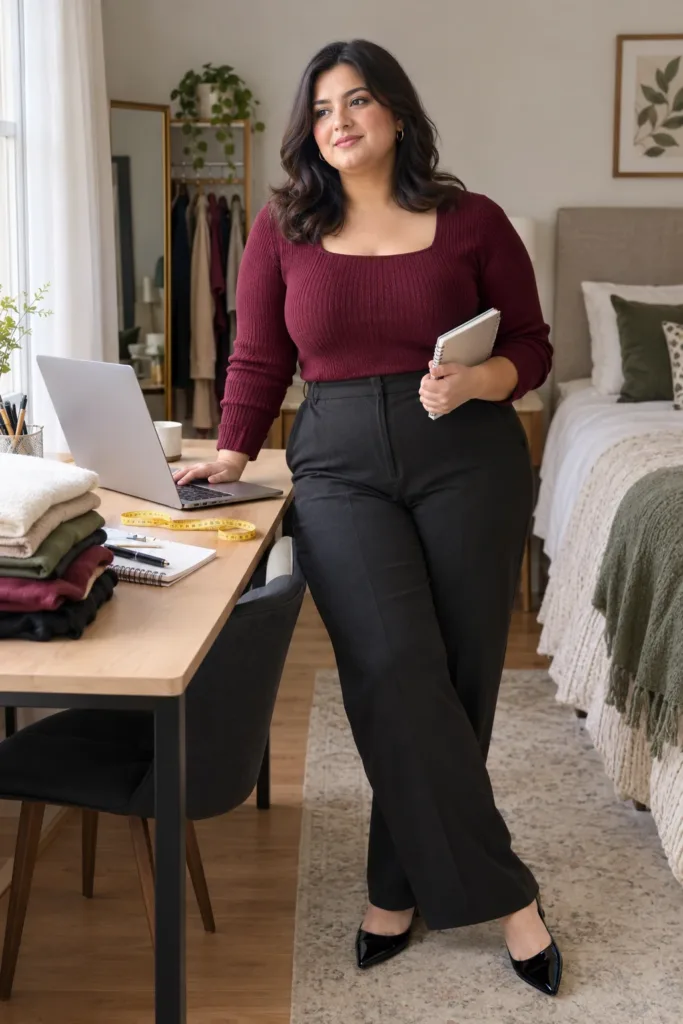
For your next online order, use this checklist:
- My measurements: Do they match the size chart?
- Garment type: Where does this item need the most room?
- Fabric: Does it stretch?
- Fit: Is it fitted, relaxed, oversized, or structured?
- Reviews: Do shoppers mention sizing issues?
- Return policy: Can I return or exchange it if the fit misses?
This takes less time than dealing with an avoidable return.
FAQ: Plus Size Online Shopping
How do I know what plus size to order online?
Start with your bust, waist, and hip measurements. Compare them with the exact product’s size chart, then consider fabric stretch and the garment’s intended fit.
Should I size up when shopping for plus size clothes?
Not automatically. Size up when the garment’s measurements, fabric, or fit notes show that you need more room. Your measurements matter more than the size number.
How can I avoid buying the wrong size online?
Use a simple system: measure yourself, check the product-specific size chart, study the fabric, read recent reviews, and check the return policy before ordering.
Conclusion
You do not need to guess your size every time you shop online. Measure your body, check each product’s size chart, understand the fabric, and choose based on how the garment should fit. Once you learn this system, online shopping becomes much less stressful. You can shop for pieces that create shape, balance proportions, and feel comfortable from the start. For more practical styling help, explore our related plus-size outfit guides next.