The calendar says spring, but the thermometer says otherwise. You pull out your lightest jacket, step outside, and immediately regret it.
That seasonal confusion is completely normal. Spring weather rarely checks the calendar before it decides how cold to be.
This guide gives you 10 plus size cold spring outfits for curvy women. Each one solves a real problem: too warm for a winter coat, too cold for none at all, windy mornings, and rainy afternoons that never quite warm up. You will walk away knowing exactly what to wear on spring’s coldest days.
Every formula uses real fabrics and layers, so you stay warm without digging your winter wardrobe back out.
Let’s get you dressed for the spring that actually shows up.
What Actually Makes Plus Size Cold Spring Outfits Work
Four details solve cold spring dressing better than any single heavy coat. Transitional outerwear, like a medium-weight jacket or trench, bridges the gap between a bulky parka and nothing at all.
Layering thin traps more warm air than one thick piece, and it’s easier to adjust as the day warms up. Wind resistance matters more in spring than raw cold, since spring wind cuts through fabric that handled winter just fine. Last, waterproof footwear handles the rain spring tends to bring along with the chill. Get these four right, and any color works underneath.
1. The Too-Warm-For-Winter-Coat Layer
The problem: your parka feels like overkill, but your light jacket isn’t warm enough.
The Formula:
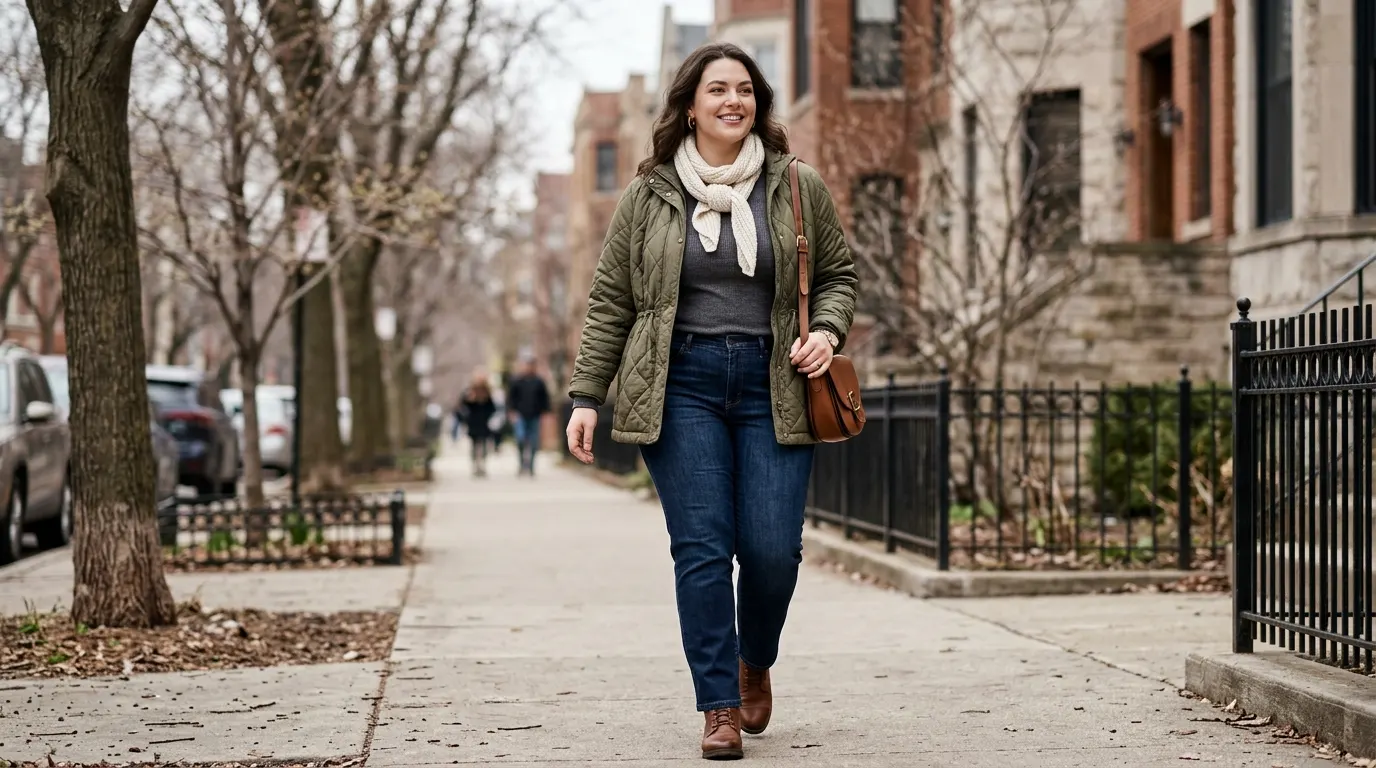
- Fitted long-sleeve thermal top
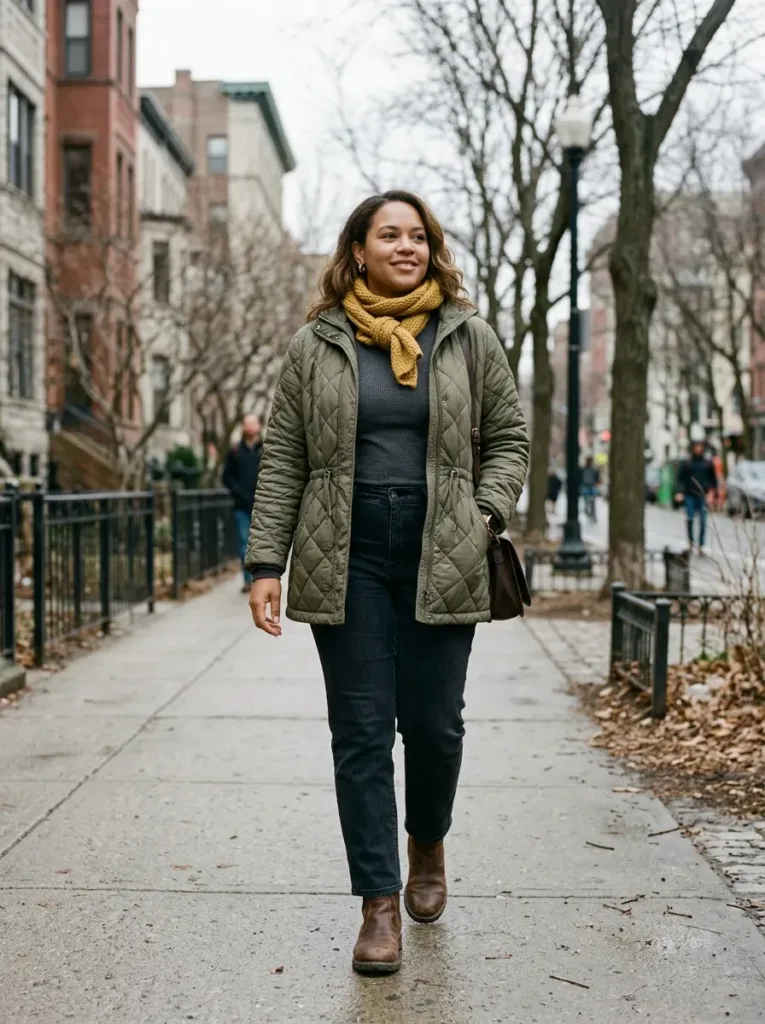
- Medium-weight quilted jacket, hip length
- Straight-leg jeans
- Ankle boots
- Knit scarf, easy to remove
Why It Works: A medium-weight quilted jacket fills the exact gap between a heavy winter coat and a thin spring jacket, so you’re never sweating or shivering. The thermal top underneath adds real warmth without bulk, letting the jacket alone handle the outer layer.
Stylist Tip: Choose a jacket with a drawstring waist. It defines your shape and seals out wind at the exact point where cold air sneaks in.
Wear It To: Cold spring errands, transitional-weather commutes.
Swap It: Swap the jacket for a lighter version once temperatures climb into the 60s.
2. The Rainy Cold Spring Day Outfit
The problem: it’s 45 degrees and raining, and nothing in your closet wants to handle both at once.
The Formula:
- Fitted long-sleeve top in charcoal
- Belted water-resistant trench coat
- Straight-leg jeans
- Waterproof ankle boots with a warm lining
- Compact umbrella
Why It Works: A belted water-resistant trench handles both the rain and the cold in one piece, since the belt seals out wind while the water-resistant fabric keeps you dry. Lined waterproof boots solve the “cold, wet feet” problem that ruins most rainy spring days.
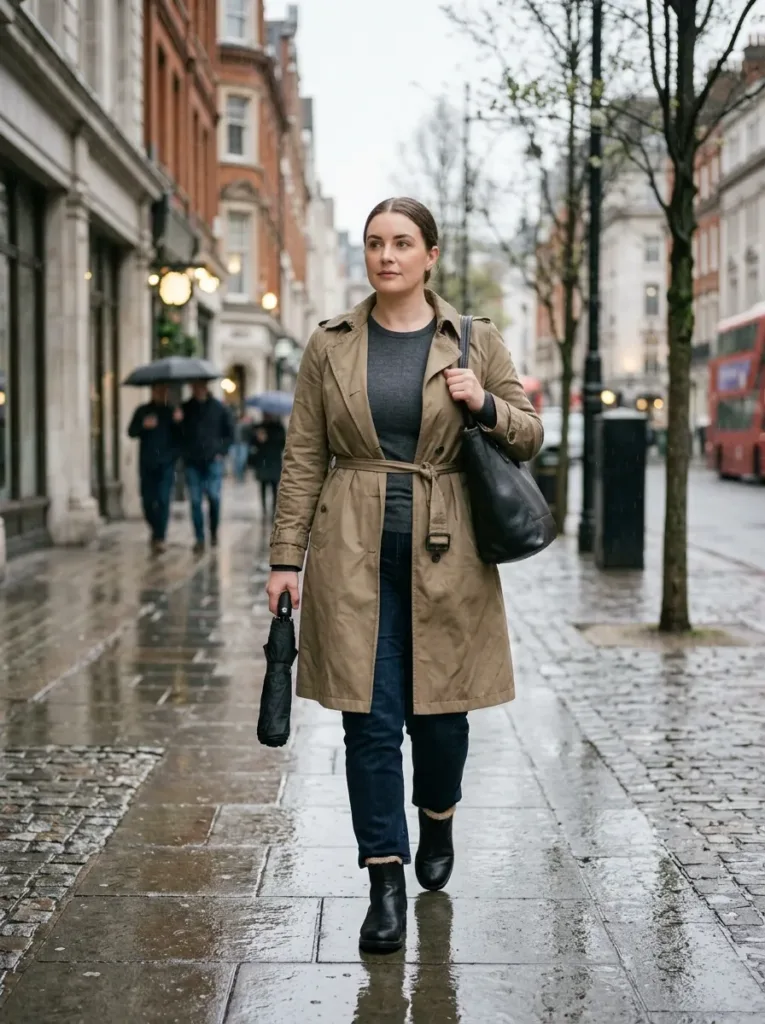
Stylist Tip: Choose boots with a warm lining, not just a waterproof exterior. Waterproof alone keeps water out but does nothing for actual warmth.
Wear It To: Rainy cold spring commutes, errand days with bad weather.
Swap It: Swap the trench for a lighter raincoat once temperatures rise above 55.
3. The Windy Cold Spring Walk
The problem: the temperature reads mild, but the wind cuts straight through everything you own.
The Formula:
- Fitted turtleneck in soft cream
- Wind-resistant zip-up jacket, fitted at the waist
- Straight-leg trousers
- Lined ankle boots
- Knit beanie, easy to remove indoors
Why It Works: A wind-resistant jacket blocks the chill that a regular knit or cotton outer layer simply can’t stop, even when the actual temperature isn’t that low. The fitted waist on the jacket keeps wind from sneaking up underneath, which matters more than the jacket’s overall warmth rating.
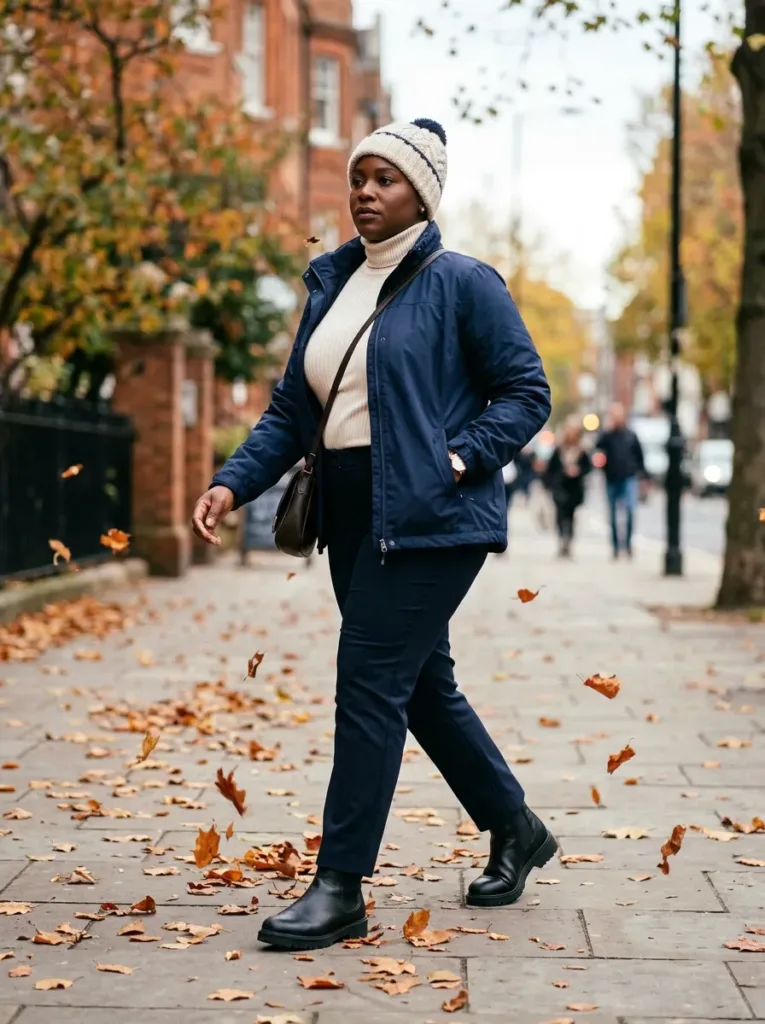
Stylist Tip: Check the jacket label for “wind-resistant” or “windproof” specifically. Water-resistant alone doesn’t guarantee it blocks wind the same way.
Wear It To: Windy spring days, outdoor errands, dog walks near open areas.
Swap It: Swap the jacket for a lighter zip-up once the wind dies down later in the season.
💡 Quick Styling Rule: Check for wind resistance, not just warmth, when shopping for a spring jacket. A thin, windproof layer often beats a thicker, non-windproof one on a blustery day.
4. The No-Bulk Errand Layering Set
The problem: layering for cold spring often means looking twice your size by the third piece.
The Formula:
- Fitted ribbed long-sleeve top
- Lightweight puffer vest, fitted through the shoulders
- Straight-leg jeans
- Ankle boots
- Small crossbody bag
Why It Works: A fitted vest adds real warmth to your core without the bulk of full sleeves, since removing sleeves from the equation cuts a layer of fabric entirely. The ribbed top underneath stays close to your body, so the vest layers smoothly instead of adding visible bulk.

Stylist Tip: Choose a vest labeled “packable” or “lightweight.” These versions add warmth without the thick, stiff fill that older puffer styles tend to have.
Wear It To: Cold spring errands, quick outdoor stops.
Swap It: Swap the vest for a cardigan once the weather turns mild.
⚠️ Common Mistake: Most women layer thick pieces together, assuming more fabric always means more warmth. Three thin layers trap more warm air between them than one bulky piece, and they’re far easier to adjust as the day changes.
5. The Cold Morning Dog Walk Outfit
The problem: you need to walk the dog at 6 a.m. before the day warms up, and you want to get back inside fast.
The Formula:
- Thermal leggings under joggers
- Long-sleeve base layer
- Hooded fleece jacket, zipped
- Waterproof walking shoes
- Knit gloves and a beanie
Why It Works: Thermal leggings under joggers add real warmth without needing a second pair of pants, solving the early-morning cold without extra bulk. A hooded fleece jacket traps heat at your core and covers your head in one piece, so you don’t need to juggle a separate hat in the dark.

Stylist Tip: Keep this exact outfit in a single drawer, fully assembled. Half-asleep mornings go faster when you’re not hunting for pieces.
Wear It To: Early morning dog walks, quick cold-weather outdoor errands.
Swap It: Drop the thermal leggings once mornings warm up later in the season.
“Dress for the actual morning, not the season on the calendar. Your body only knows the temperature outside the door.”
6. The Chilly Outdoor Event Dress Layer
The problem: you have an outdoor event, like a graduation or wedding, and the forecast took a cold turn.
The Formula:
- Long-sleeve midi dress in soft navy
- Wool-blend cropped coat
- Suede ankle boots
- Delicate layered jewelry
- Small structured bag
Why It Works: A long-sleeve dress solves the cold event problem at its source, without needing a bulky coat to carry the warmth alone. The cropped wool coat adds a polished outer layer while still showing most of the dress, which matters when the event calls for a dressier look.

Stylist Tip: Choose a coat that hits right at your hip. It keeps the dress visible underneath while still covering your core where you need warmth most.
Wear It To: Outdoor graduations, cold-snap spring weddings, formal outdoor events.
Swap It: Swap the boots for heels and remove the coat if the event moves indoors.
👗 Closet Shortcut: A fitted turtleneck, straight-leg jeans, and one warm outer layer, whether that’s a quilted jacket, vest, or trench, can build looks 1, 3, and 4 with almost nothing new. Rotate just the outer piece and accessories.
I used to pack away my winter layers the first warm weekend of March and regret it every single year. Now I keep one cold-spring drawer separate, and it saves me from digging through storage bins every time the temperature drops again.
7. The Cold-Commute Warm-Office Layer
The problem: your commute is freezing, but your office runs warm the second you walk in.
The Formula:
- Fitted blouse in soft blush
- Straight-leg trousers
- Wool-blend coat, easy to remove and carry
- Low block heels
- Structured tote bag
Why It Works: A coat you can remove and carry easily solves the indoor-outdoor swing completely, since the blouse and trousers underneath already work as a complete, polished office outfit on their own. Wool blend keeps you warm during the actual commute without overheating once you’re inside.

Stylist Tip: Choose a coat that folds over your arm without wrinkling the sleeves. A structured wool blend handles this far better than a puffer, which looks bulky carried all day.
Wear It To: Cold spring commutes, office days with strong indoor heating.
Swap It: Swap the wool coat for a lighter trench once mornings warm up.
8. The Unexpectedly Cold Spring Break Outfit
The problem: you packed for warm spring break weather, and the destination turned out colder than expected.
The Formula:
- Lightweight thermal top as a base layer
- Fitted sweater, worn over the thermal
- Straight-leg jeans
- Ankle boots
- Packable scarf
Why It Works: A thermal base layer under a regular sweater adds real warmth without requiring a whole separate cold-weather wardrobe you didn’t pack. This combo solves the “I only brought warm-weather clothes” travel problem using pieces most people bring along anyway.
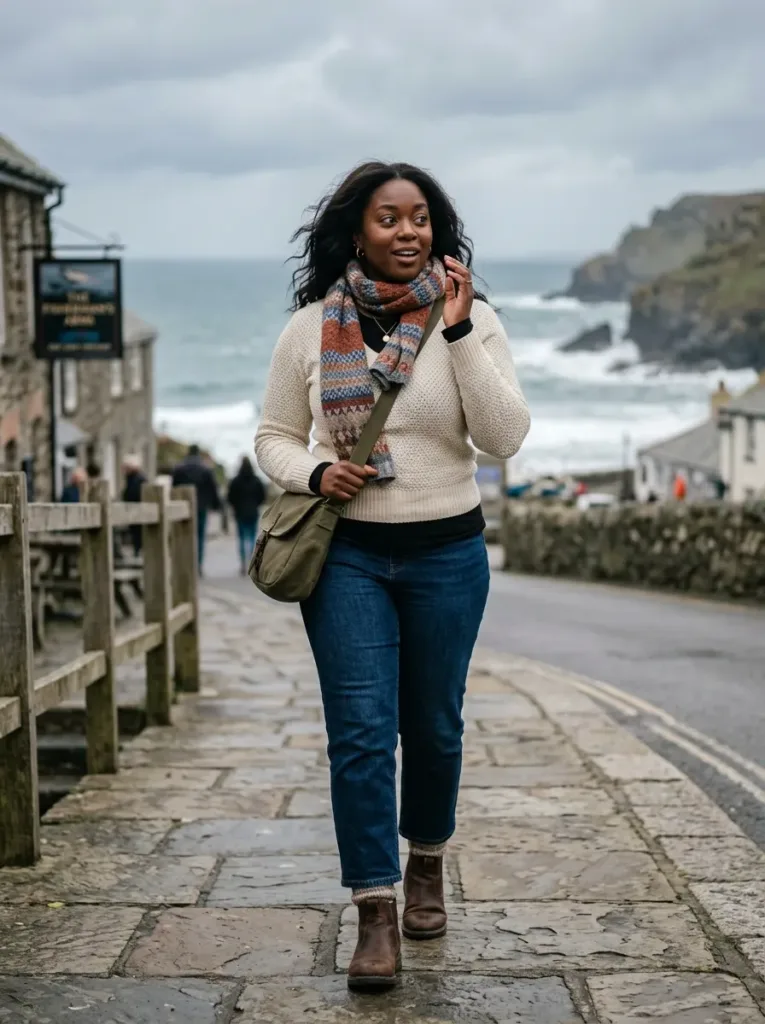
Stylist Tip: Pack one thermal top specifically as travel insurance, even for a warm-weather trip. It weighs almost nothing and saves an outfit if the forecast changes.
Wear It To: Spring break trips with unpredictable weather, travel days.
Swap It: Drop the thermal layer the moment the weather warms back up.
9. The Cold Spring Evening Date Night Outfit
The problem: the date is outdoors or involves walking, and spring evenings drop fast once the sun goes down.
The Formula:
- Fitted long-sleeve top in deep burgundy
- Straight-leg trousers
- Cropped faux-leather jacket
- Ankle boots
- Statement earrings
Why It Works: A cropped jacket adds warmth and polish for an evening date without covering a full outfit underneath, since the length stays short enough to show what you’re actually wearing. Deep burgundy and black read as elevated evening colors, even in a practical, warm combination.
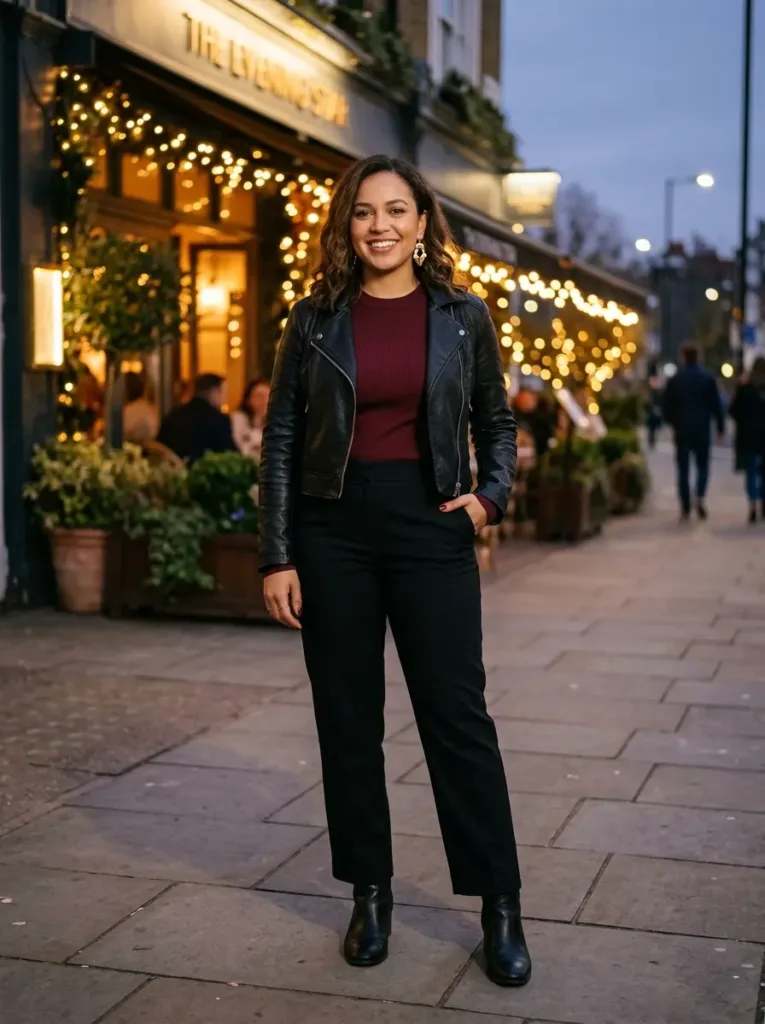
Stylist Tip: Choose a jacket with some structure at the shoulders. It keeps the silhouette sharp, even layered over a simple long-sleeve top.
Wear It To: Cold spring evening dates, dinner followed by a walk.
Swap It: Swap the jacket for a lighter blazer once evenings warm up later in the season.
10. The Weekend Hike Cold Spring Layer
The problem: you want to get outside for a hike, but spring trails run cold, especially in the shade.
The Formula:
- Moisture-wicking long-sleeve base layer
- Fleece quarter-zip
- Stretch hiking pants
- Waterproof hiking boots
- Lightweight packable rain shell
Why It Works: A moisture-wicking base layer pulls sweat away from your skin during actual exertion, which matters more on a hike than on a casual walk, since sweat left against cold skin chills fast. The packable rain shell solves spring’s unpredictable trail weather without adding real weight to your pack.
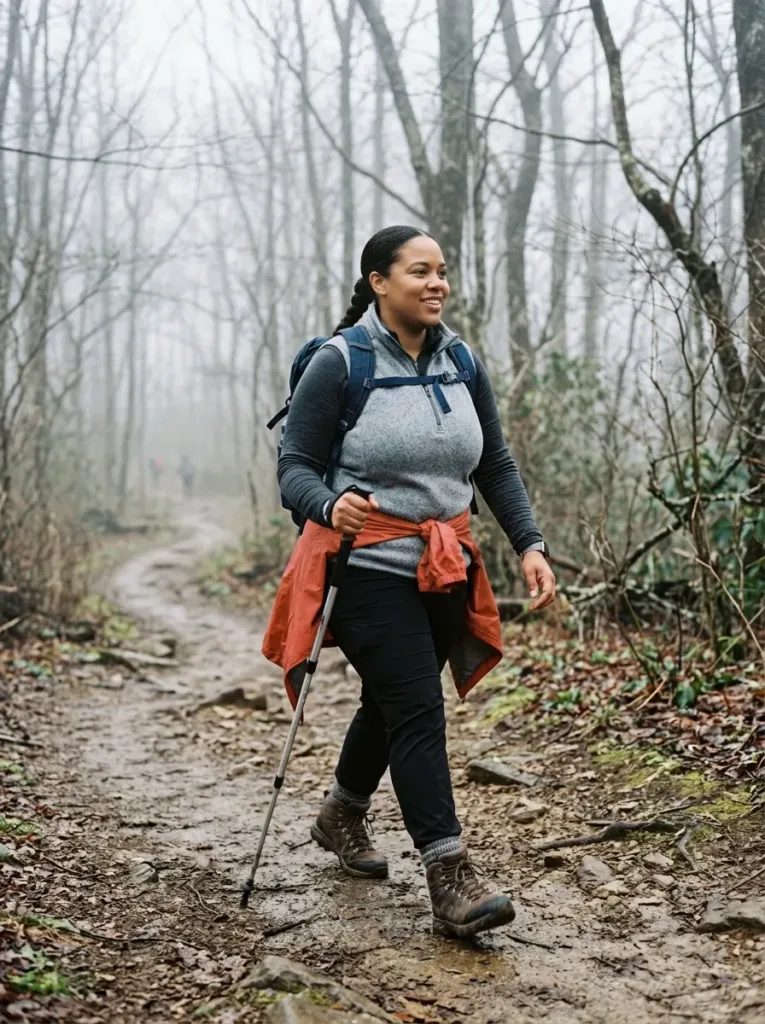
Stylist Tip: Pack the rain shell even on a clear-sky morning. Spring trail weather changes faster than almost any other season.
Wear It To: Spring hikes, outdoor trail walks, cold-weather exercise.
Swap It: Drop the fleece layer once you’re moving and warming up on the trail.
Frequently Asked Questions
What should curvy women wear for cold spring weather?
Layer a fitted thermal or long-sleeve base with a medium-weight jacket or vest, rather than reaching for a full winter coat. Choose wind-resistant outerwear and waterproof boots, since spring cold often comes with wind and rain rather than snow.
How do you layer for spring without looking bulky?
Choose thin, fitted base layers instead of thick sweaters, and add one structured outer piece, like a fitted vest or quilted jacket. Three thin layers trap more warmth than one bulky piece while keeping your silhouette defined.
What jacket works best for unpredictable spring weather?
A medium-weight quilted jacket or a belted water-resistant trench both bridge the gap between a heavy winter coat and a light spring jacket. Look for wind resistance specifically, since that matters more than raw warmth on many cold spring days.
How do you dress for a cold commute but a warm office?
Wear a complete outfit that works without a coat, like a blouse and trousers, then add an easily removable outer layer such as a wool coat. This way the coat handles the cold commute, and the outfit underneath stays comfortable indoors.
What shoes work best for cold, rainy spring days?
Waterproof ankle boots with a warm lining handle both the wet and the cold at once. Look for a lining specifically, since waterproof exteriors alone keep water out but do little to add actual warmth to your feet.
Final Thoughts
Cold spring weather stops being frustrating once your layers actually work together. Pick the formula that solves your real problem, whether that’s wind, rain, or a commute that swings from freezing to warm, and you’ll stay comfortable no matter what the thermometer says. Save this guide for the next cold snap.